5 Systemic Gaps in Junior Tennis Development
When an ambitious young athlete dominates in training but collapses under match pressure, the default reaction is often to schedule another technical lesson or demand “more mental grit.”
But structural competitive anxiety is rarely a character flaw or a mechanical failure. More often, it is the result of missing foundational systems in their performance ecosystem. Here are the 5 critical elements often missing in competitive junior tennis preparation:
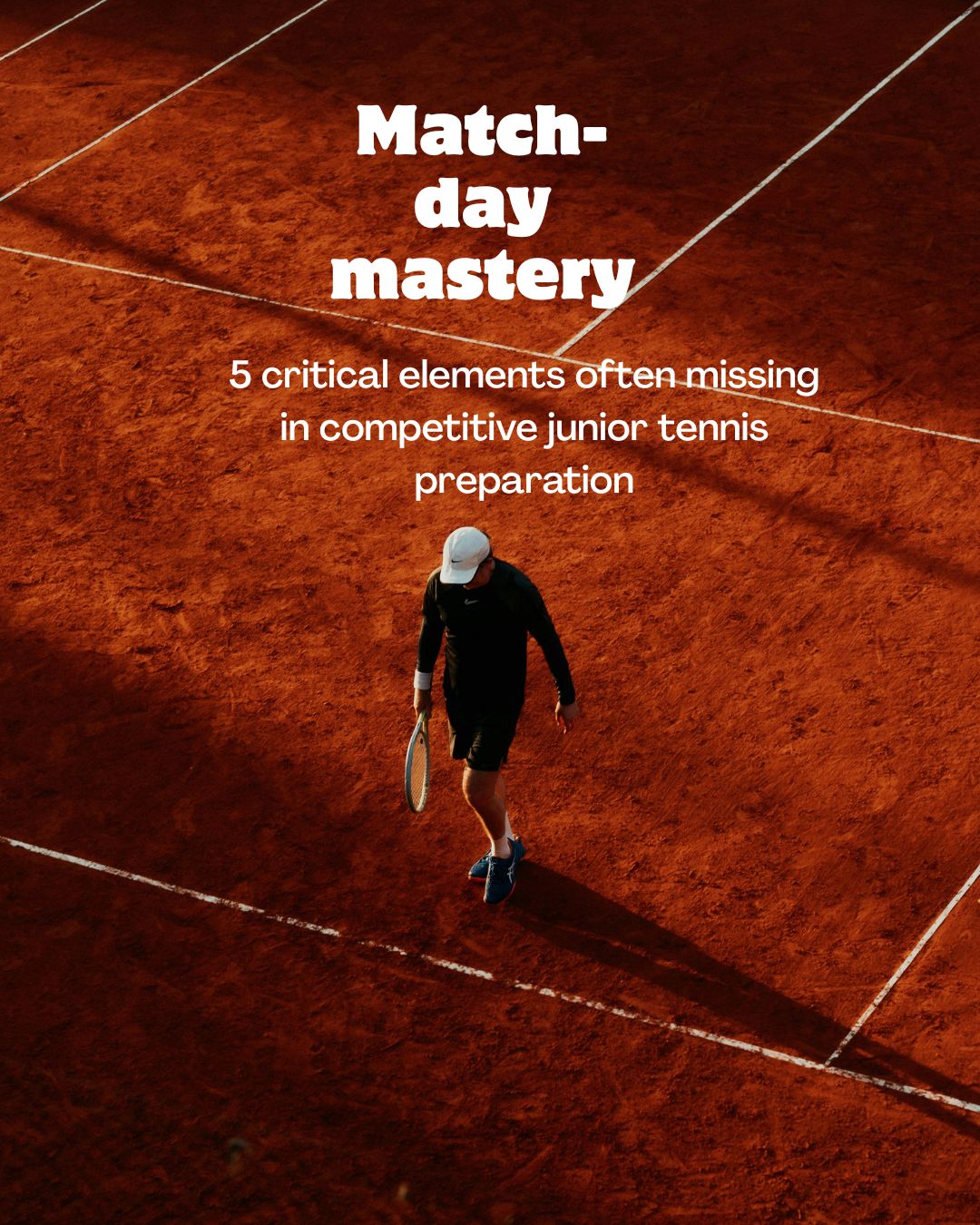 Photography by Geneviève Chassé
1. A Trained Visual Anchor (The Quiet Eye)
Most junior players are told to “focus,” but they are never taught how to visually process information under stress. When panic sets in, their eyes frantically scan the sidelines or the scoreboard. This visual panic signals an immediate threat to the deep brain, pulling a biological emergency brake on their motor loops and freezing their swing.
2. Autonomic Nervous System Regulation
An over-activated nervous system overrides hours of muscle memory. Without concrete tools to stabilize their physiology mid-match, junior athletes fall into “manual micro-management”—trying to consciously control a physical motion that should be completely automatic.
3. Clear Boundaries Between Talking and Execution
Traditional mindset advice relies heavily on “talk therapy” and analytical discussions. On a match court, excessive inner dialogue creates cognitive overload. Young athletes don’t need more theories; they need targeted, neuro-somatic protocols that quiet the mind and allow natural potential to take over.
4. Parent-Pillar Integration
An athlete does not compete in a vacuum; they operate within an ecosystem. When parents and coaches are not strictly aligned on performance feedback and expectation management, it creates an invisible undercurrent of social pressure that micro-triggers the athlete before they even step onto the baseline.
5. A Long-Term Vision of Mental Conditioning
Mental synchronization is a deliberate, long-term preparation—not a crisis-management tool to be deployed only after a devastating loss. There are no magic wands. The cognitive routines and resilience built for the baseline are foundational habits that must be trained structurally, eventually transferring into their daily life and future environments.